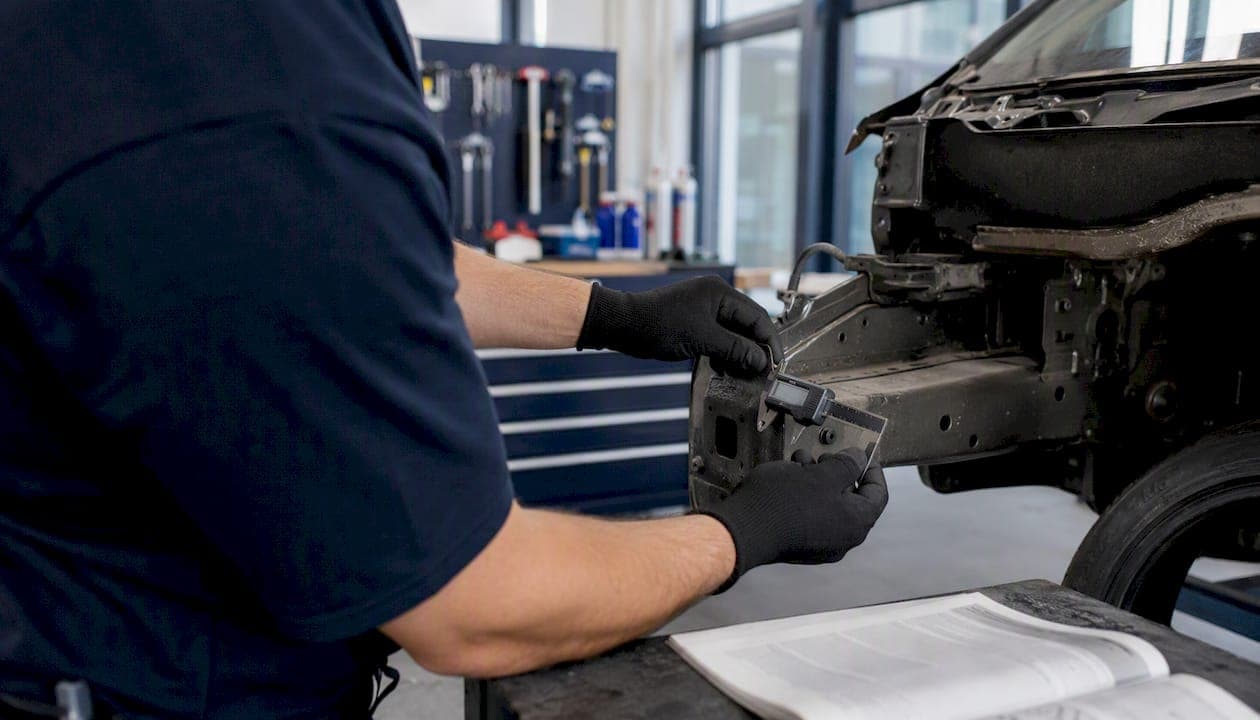
Structural damage to a car means the vehicle's load-bearing skeleton or chassis was affected. That changes crash performance, alignment geometry, and resale value in ways that cosmetic repairs can't fix. Whether the car is drivable, repairable, or a total loss depends on which components were hit, whether post-repair measurements can reach OEM tolerance, and whether the shop documented every step. If you're noticing handling changes or unusual noises, stop driving the car. Run a VIN history check and book a certified structural inspection before you make any decisions.
- Stop driving if handling feels off, the car pulls hard, or you hear new creaks over bumps.
- Run a VIN report to check for accident flags, salvage titles, and total-loss history.
- Book a certified structural inspection with 3D chassis measurement, not just a visual check.
- Request documentation: OEM measurement printouts, repair invoices, and ADAS recalibration records.
Key Takeaways
Structural damage affects load-bearing chassis components and requires OEM-spec 3D measurement to confirm whether a repair has genuinely restored vehicle safety and geometry.
| Point | Details |
|---|---|
| Structural vs. cosmetic | Frame rails, pillars, and floor pans are structural; panels and trim are cosmetic. Only structural damage affects crash performance. |
| Repairability standard | A repair is only verified when post-repair 3D measurements match OEM tolerance specs. No printout means no proof. |
| Total-loss threshold | Insurers commonly total a vehicle when repair costs approach the actual cash value, triggering a salvage title. |
| Long-term consequences | Even after quality repairs, structural history reduces resale value and can complicate insurance coverage. |
| Vinify for triage | Run an official Carfax report through Vinify first to check for accident flags and get an AI Judge score before committing to a full inspection. |
Table of Contents
- What structural damage to a car actually means
- Unibody vs. body-on-frame: why construction changes everything
- The five types of frame damage and what they look like
- How structural damage happens
- How to spot likely structural damage before calling a shop
- What a professional structural inspection involves
- Repair methods, costs, and when insurers total a car
- Is it safe to drive a car with structural damage?
- How structural damage affects resale value, titles, and insurance
- How a VIN report helps you triage structural-damage risk
- Action checklist for owners and buyers who suspect structural damage
- What experienced buyers actually do differently
- Check the VIN before you commit to an inspection
- Sources
What structural damage to a car actually means
Structural damage refers to harm done to the components that carry and distribute load through the vehicle: the frame rails, A/B/C pillars, floor pans, rocker panels, firewall, suspension mounting points, and crumple zones. These parts work together to protect occupants in a crash and keep the suspension geometry within the tight tolerances that modern ADAS systems depend on.
Cosmetic damage is everything else: door skins, fenders, bumper covers, trim, and paint. A dented fender is cosmetic. A bent front rail is structural. The distinction matters because cosmetic repairs restore appearance; structural repairs must restore geometry, stiffness, and crash performance to OEM specification.
| Category | Examples | Safety impact |
|---|---|---|
| Structural | Frame rails, pillars, floor pan, firewall, suspension mounts, crumple zones | Direct: affects crash energy management and alignment |
| Cosmetic | Door skins, fenders, bumper covers, trim, paint | Minimal: appearance only, no load-bearing function |
For ADAS-equipped vehicles, the stakes are higher. A misaligned frame changes how crumple zones absorb energy and can throw radar, camera, and lidar sensors out of calibration, making lane-keep assist and automatic emergency braking unreliable even when the car looks fine from the outside.
Unibody vs. body-on-frame: why construction changes everything
The chassis type determines what gets damaged, how it's repaired, and what the realistic outcome looks like.
Unibody construction integrates the body and frame into a single welded shell. Most modern passenger cars and crossovers use this design. When a unibody takes a hard hit, the energy spreads through the shell, which means damage can appear in sections far from the impact point. Repairs typically involve sectioning (cutting out the damaged section and welding in a new OEM or OEM-equivalent piece) or controlled straightening on a frame rack, followed by 3D measurement verification.
Body-on-frame construction mounts a separate body on a ladder-style frame. Many full-size trucks, body-on-frame SUVs, and older vehicles use this layout. Damage tends to stay more localized, and the frame itself can sometimes be straightened or replaced as a unit without affecting the body.
A few things that matter regardless of construction type:
- Material matters. High-strength boron steel and aluminum sections cannot be straightened the same way mild steel can. Some boron components must be replaced, not pulled, because heat or force changes their metallurgical properties.
- OEM procedures are not optional. Manufacturers publish specific repair procedures for each structural section. Shops that skip those procedures and rely on visual judgment alone are guessing at geometry.
- Sectioning locations are specified. OEM repair manuals define exactly where cuts can be made and what joining methods are allowed. A weld in the wrong location creates a stress concentration that can fail in the next collision.
The five types of frame damage and what they look like
Frame damage ranges from minor misalignment to severe structural collapse, and accurate diagnosis requires an auto body measuring system. Here's how the five common types present:
Minor damage is small deviations from spec, often from low-speed impacts or curb strikes. The car may look fine but pull slightly or show uneven tire wear. Easy to miss without measurement.
Front-end damage hits the front rails, radiator support, and firewall area. Signs include a hood that won't close flush, coolant leaks, and steering that feels vague or off-center. This is the most common type from frontal collisions.
Mash damage is longitudinal compression, where the front or rear of the vehicle is pushed back toward the cabin. The wheelbase shortens measurably. You'll see crumpled rails, doors that bind, and a cabin that feels tighter than it should.
Sway damage is a lateral shift, where one side of the vehicle is pushed sideways relative to the other. The rear wheels don't track behind the front wheels, a condition sometimes called "dog-tracking." Visible from behind the car while it drives away.
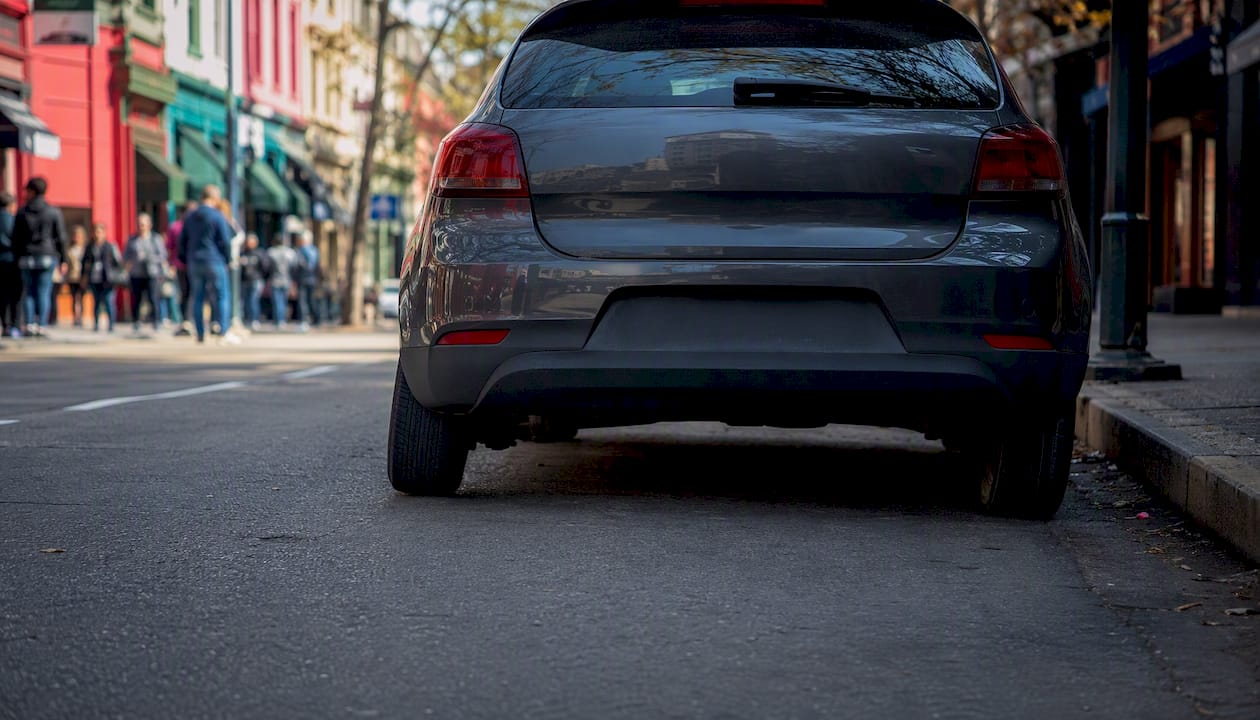
Twisted damage is the hardest to spot without equipment. The chassis has rotated along its longitudinal axis, so one corner sits higher than the others. The car may handle normally at low speed but feel unstable at highway speeds. A 3D measurement system is the only reliable way to confirm it.
How structural damage happens
The obvious cause is a collision, but the full picture is wider than most sellers admit.
High-energy frontal impacts are the most common source of serious frame damage. The crumple zones absorb energy by deforming deliberately, which is the design intent, but that deformation can extend into the main rails if the impact is severe enough. Corner strikes (hitting a pole or barrier at an angle) concentrate force on one rail and often produce sway or twist. Rollovers load the roof pillars and rocker panels in ways they were never designed to handle.
Non-collision causes are under-reported. Corrosion on load-bearing components can undermine structural safety margins over time, and rust damage rarely shows up in accident-only history reports. Repeated hard pothole strikes can fatigue suspension mounting points. Poor prior repairs, where a shop straightened a rail without measurement or welded over damage without sectioning, can leave the car out of spec while looking repaired.
Modern crumple zones are designed to make front-end damage visible and contained. The trade-off is that a car can absorb a significant impact without looking totaled from the outside, while the rails behind the crumple zone have taken hidden damage.
How to spot likely structural damage before calling a shop
Common buyer-observable symptoms include misaligned body panels, creaks over bumps, persistent pulling, and abnormal tire wear. Here's a practical walk-around and drive checklist:
Walk-around checks:
- Panel gaps: run your eye along the hood, doors, and trunk. Gaps should be even on both sides. A gap that's wider on one side than the other is a red flag.
- Hood and trunk alignment: they should sit flush with the surrounding bodywork. A hood that sits high on one corner often means the front rail on that side has moved.
- Underbody: crouch and look under the car at the rails and floor pan. Fresh undercoating over a specific area, visible welds that don't match the factory finish, or wrinkled metal are all signs of prior structural work.
- Pillar condition: check the A and B pillars for paint that doesn't match, filler, or subtle kinks.
Driving checks:
- Let go of the wheel briefly on a flat, straight road. The car should track straight. A persistent pull suggests alignment is off, which can mean structural geometry is off.
- Drive over a speed bump slowly and listen for creaks or pops from the body structure.
- Check that the steering wheel returns to center after a turn. Slow return or a wheel that sits off-center at straight-ahead suggests alignment or structural issues.
Pro Tip: When you find visible panel misalignment AND the car pulls on a straight road, treat those two together as strong grounds for a 3D chassis measurement, not just a wheel alignment. Alignment shops adjust for geometry; they don't fix the underlying structure.
What a professional structural inspection involves
A proper structural inspection follows a sequence, and shops that skip steps are cutting corners.
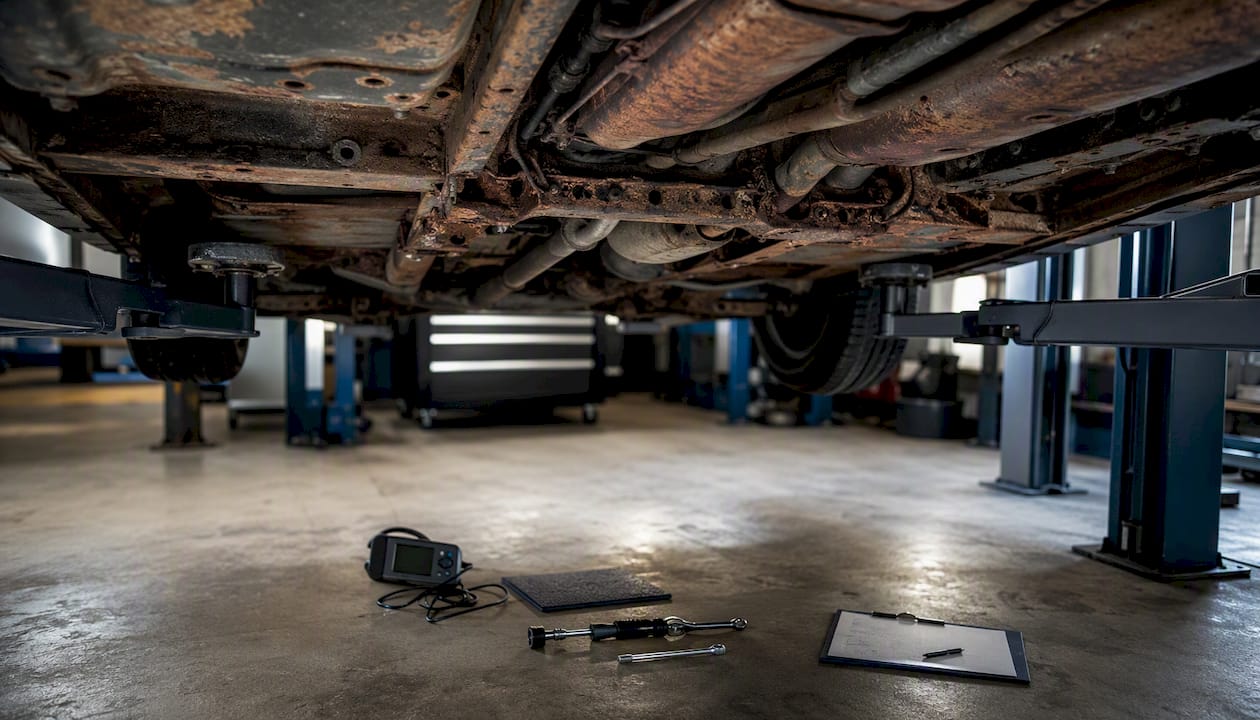
The process starts with a lift inspection: the technician examines the underbody for corrosion, previous repair evidence (mismatched welds, filler, fresh paint in structural areas), and obvious deformation. Where access is limited, trim panels may be removed. Then comes the measurement phase.
A 3D chassis measuring system uses reference points defined in the OEM data for that specific vehicle to check whether every structural point is in its correct position in three dimensions. For repair certification on many light vehicles, a 3D chassis measurement is required, and vehicles that fail must be referred to a specialist repair certifier. The output is a printed measurement chart showing actual versus OEM spec for every reference point. That printout is the proof of a correct repair.
Questions to ask any shop before you authorize structural work:
- Do you have OEM measurement data for this specific VIN and model year?
- Can I see the before and after measurement printouts?
- Were any boron steel or aluminum structural sections involved, and how were they handled?
- Does your warranty cover structural work, and what exactly does it include?
- Will ADAS systems be recalibrated after the repair, and do you have the equipment to do it?
A shop that can't answer those questions clearly, or that offers a structural repair without a post-repair measurement printout, is not the right shop for this job.
Repair methods, costs, and when insurers total a car
Repairability depends on whether the damage can be corrected to meet OEM tolerance specifications. When post-repair measurements land within OEM spec, structural integrity can be restored. When they can't, the car is a total loss regardless of how it looks.
Common repair methods:
- Controlled straightening on a calibrated frame machine with directional pulls at OEM-specified attachment points
- Sectioning: cutting out a damaged section and welding in a new piece at an OEM-approved location
- Structural welding and reinforcement for specific joint areas
- Boron or aluminum-specific repairs using manufacturer-approved processes and filler materials
- ADAS recalibration and full suspension rebuild after structural geometry is restored
What can't be fixed: Some boron steel components lose their strength properties if heated or pulled and must be replaced outright. Extreme crush that shortens the wheelbase beyond what sectioning can correct, EV battery enclosures that are part of the structural floor, and damage that alters the crash structure beyond OEM tolerance all push a car toward total loss.
Cost drivers: Parts cost (a subassembly section versus a single bracket), labor hours for measurement and pulling, specialized equipment access, ADAS recalibration, and the paint and panel work that follows structural repair all add up. Costs vary depending on vehicle make, model, and damage severity.
Once a car is totaled, it usually receives a salvage title, which affects registration, insurability, and resale value permanently.
Typical repair timeline:
- Inspection and 3D measurement: 1–2 days
- Parts ordering (structural sections can have lead times): 3–10 days
- Structural repair and pulling: 2–5 days
- Alignment, ADAS calibration, and final measurement: 1–2 days
- Paint and panel work: 2–5 days
Total elapsed time for a significant structural repair: two to four weeks is common, longer if parts are on backorder.
Is it safe to drive a car with structural damage?
The short answer is no, not if you have symptoms. Driving on a compromised chassis accelerates wear and can be unsafe; professional measurement and repair are recommended rather than informal fixes.
Tow rather than drive if you notice:
- A severe pull that requires constant steering correction
- Steering instability or a wheel that wanders at highway speed
- Visible rail collapse or a door that won't close properly after a collision
- Compromised suspension mounts (clunking, bottoming out, or a wheel that sits at an unusual angle)
- Fluid leaks or exposed wiring from the impact area
Longer-term, a car with unresolved structural damage wears tires and suspension components faster than normal because the geometry is wrong. ADAS systems that depend on precise sensor angles, such as forward collision warning and lane centering, can behave unpredictably. In some jurisdictions, driving a vehicle with known structural defects can affect your legal liability in a subsequent accident.
How structural damage affects resale value, titles, and insurance
Structural damage produces a persistent market discount even after a high-quality repair, and it creates ongoing insurance and resale hurdles. The gap widens when multiple structural components were involved, when documentation is missing, or when the vehicle carries a total-loss history.
Title implications:
- A salvage title is issued when an insurer totals the vehicle. It follows the car permanently.
- A rebuilt title is issued after a salvaged vehicle passes a state inspection and is returned to road use. Requirements vary significantly by state or country.
- Either brand makes the car harder to finance, harder to insure at full value, and harder to sell at market price.
Insurance consequences:
- Some carriers won't write comprehensive or collision coverage on a rebuilt-title vehicle.
- Those that do often cap the payout at a lower value than a clean-title equivalent.
- A structural repair history, even without a salvage title, can affect diminished-value claims after a subsequent accident.
Disclosure and negotiation:
- In most jurisdictions, sellers are required to disclose known structural damage. A written repair report and a post-repair 3D measurement printout from a certified shop are the strongest tools a seller has to justify a higher asking price.
- As a buyer, documented OEM-spec repairs are worth more than undocumented ones. Missing paperwork is a negotiating lever, not a reason to trust the seller's word.
How a VIN report helps you triage structural-damage risk
A vehicle history report is the first filter, not the final answer. VIN reports typically flag structural damage without conveying severity, so a flagged report should trigger requests for photos, repair documentation, and a certified structural inspection. The flag tells you something happened; it doesn't tell you how bad it was or whether it was repaired correctly.
What VIN reports typically capture:
- Accident reports filed with insurers or law enforcement
- Salvage and rebuilt title events
- Total-loss declarations by insurers
- Auction records, sometimes including condition grades and photos
- Odometer readings and ownership history
What they usually don't capture:
- The specific structural components affected
- Whether a repair was performed and to what standard
- Corrosion or prior repair damage that was never reported to an insurer
- Cash-transaction repairs that bypassed insurance entirely
How to use a flagged report:
- Request pre-repair photos from the seller or auction records
- Ask for the repair invoice and the shop's post-repair measurement printout
- Book an independent pre-purchase inspection with 3D chassis measurement before signing anything
Carfax is the most widely referenced report provider in the U.S. market. Vinify gives buyers instant access to official Carfax-style reports by VIN or license plate, plus an AI Judge score from 0 to 100 that recommends Buy, Negotiate, or Avoid based on the report data, so you know immediately whether the history warrants a deeper inspection.
Action checklist for owners and buyers who suspect structural damage
Whether you own the car or you're considering buying it, the sequence matters.
- Stop driving if unsafe. If handling, alignment, or noise symptoms are present, don't drive the car until it's been inspected.
- Document everything with photos. Panel gaps, underbody condition, tire wear, and any visible deformation. Date-stamp the images.
- Run a VIN history report. Check for accident flags, salvage or rebuilt titles, and total-loss events before spending money on an inspection.
- Book an independent pre-purchase inspection. Use a shop with 3D chassis measuring capability, not just a visual check.
- Request OEM measurement printouts. Before and after, if the car has already been repaired. No printout means no proof.
- Confirm ADAS recalibration records. For any vehicle with driver-assistance systems, recalibration after structural repair is not optional.
- Get written estimates from at least two shops. Cost and repairability assessments can vary; a second opinion on a structural repair is worth the time.
- Use the documentation in negotiations. Missing records, a salvage title, or an unverified repair are all grounds to negotiate the price down or walk away.
Pro Tip: Insist on the post-repair 3D measurement printout as a condition of purchase. A shop confident in its structural work will have one. A seller who can't produce it either doesn't have it or doesn't want you to see it.
What experienced buyers actually do differently
The conventional wisdom says "avoid any car with frame damage." That's too blunt to be useful. A well-documented, OEM-spec structural repair on a minor front-rail section is a different situation from a twisted chassis with no paperwork and a rebuilt title.
What separates buyers who make good decisions from those who get burned is documentation discipline. The buyers who come out ahead are the ones who treat the post-repair 3D measurement printout as a non-negotiable, who check ADAS recalibration records, and who use the VIN history as a starting point for questions rather than a final verdict.
Walk away when: the seller can't produce repair documentation, the VIN report shows a total-loss flag but the seller claims "just a fender bender," the car has a rebuilt title and no inspection records, or the 3D measurement shows the chassis is still out of spec.
Consider buying when: the repair was done by a certified shop, the post-repair measurement printout shows all points within OEM tolerance, ADAS systems were recalibrated and documented, and the price reflects the history.
The history report is where that triage starts. A flagged VIN doesn't automatically mean walk away. It means ask harder questions.
Check the VIN before you commit to an inspection
Spending $200–$400 on a pre-purchase inspection makes sense once you know the VIN history warrants it. Vinify gives you that triage step first: enter the VIN or license plate and get an official Carfax report instantly, including accident flags, title events, odometer records, and auction data. The Vinify AI Judge then scores the vehicle from 0 to 100 and delivers a clear Buy, Negotiate, or Avoid recommendation based on what the report actually shows.
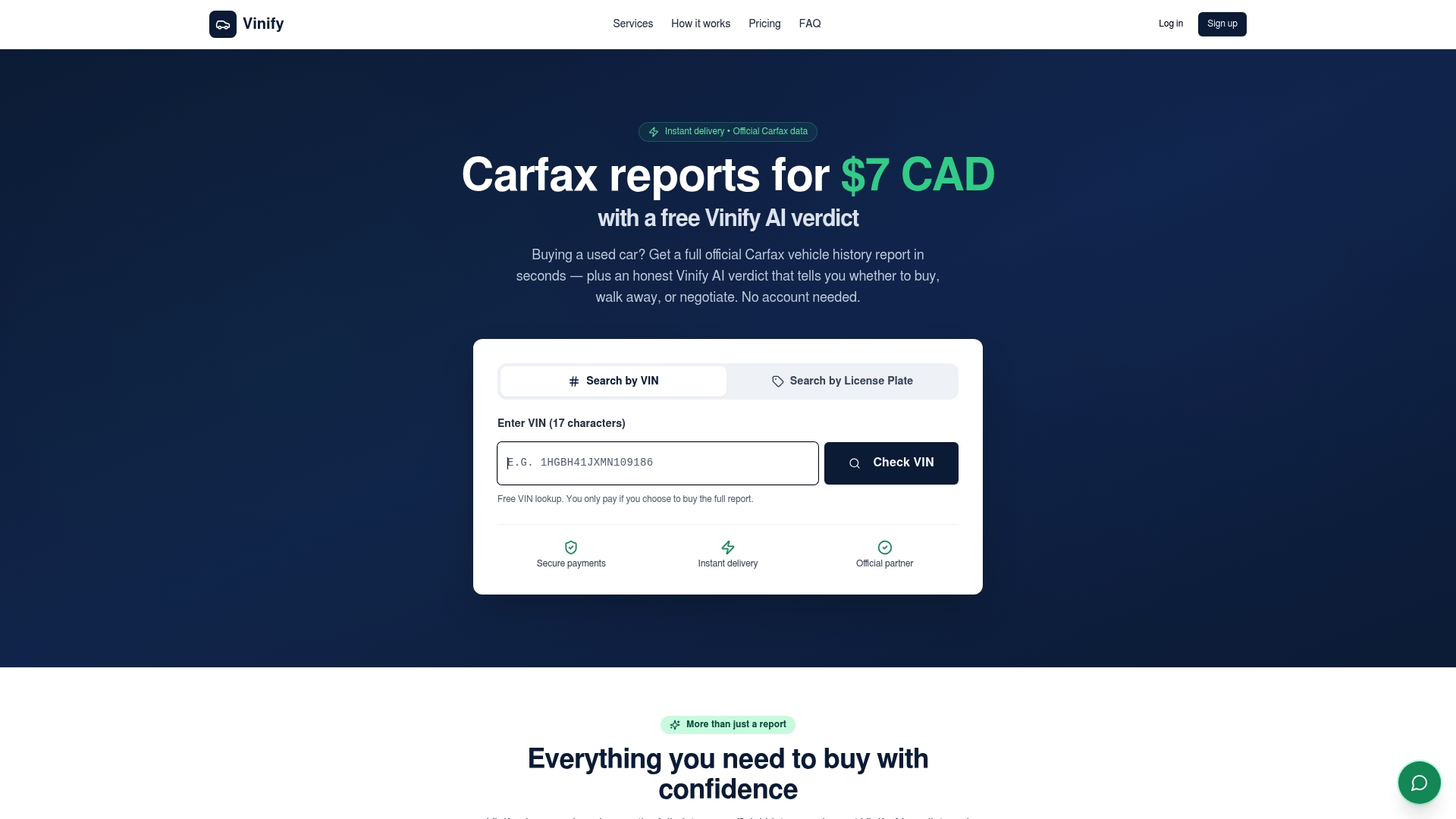
For a car with a structural-damage flag in the history, that score tells you whether the risk profile justifies the cost of a full 3D chassis inspection or whether the history alone is enough to move on. Run the report at Vinify before you book the inspection, not after.
Sources
The sources below cover the key technical and regulatory dimensions of structural damage assessment and repair.
- Car frame damage: types, symptoms & repair (2026)
- Vehicle structure — inspection specifications (NZTA)
- Car frame damage: how to know if it happens and what to do