
A rebuilt title means the vehicle was previously declared a total loss, issued a salvage title, then repaired and passed a state DMV inspection, allowing it to be legally registered and driven again. The bottom line for most buyers: proceed only after running a VIN check through NICB VINCheck, ordering an official vehicle-history report, and having a trusted mechanic inspect the car in person. Skip any of those steps and you are accepting risks that the lower price rarely covers.
Key Takeaways
A rebuilt title is a permanent brand that follows the VIN for life, and no amount of negotiation or paperwork can erase it. Verify first, buy second.
| Point | Details |
|---|---|
| Rebuilt title definition | A salvage vehicle repaired and passed state inspection; the brand is permanent in NMVTIS. |
| Top ownership risks | Limited insurance, financing refusals, resale difficulty, and latent ADAS or structural issues. |
| Essential verification steps | Run NICB VINCheck, order a vehicle-history report, and get an independent mechanic inspection. |
| Price discount expectation | Rebuilt vehicles often sell at a notable discount compared to a comparable clean-title market value. |
| Vinify's role | Instant official Carfax reports plus an AI Judge verdict help buyers verify any rebuilt-title car before purchase. |
Table of Contents
- What "salvage," "rebuilt," and "clean" titles actually mean
- How a car goes from salvage to rebuilt
- How a rebuilt title affects value, resale, financing, and insurance
- Should you buy a rebuilt-title car?
- What to check before buying a rebuilt-title car
- How to verify a vehicle's past before you commit
- State differences, title-washing, and why "rebuilt" is not a universal standard
- Price expectations and negotiation tactics for rebuilt-title cars
- When a rebuilt-title car is a reasonable buy: a final verdict
- Vinify gives you an official report and an AI verdict before you commit
- Sources
What "salvage," "rebuilt," and "clean" titles actually mean
These three title brands sit at the heart of every used-car decision involving a previously damaged vehicle.
- Clean title: The vehicle has no recorded total-loss event. It may still have accident history, but no insurer declared it a write-off.
- Salvage title: Issued when an insurer or owner declares the vehicle a total loss, typically because repair costs exceed a set percentage of the car's value. Arizona DOT defines a salvage title as a government-issued brand for a vehicle that was stolen, wrecked, destroyed, or water-damaged to the point where repair is considered uneconomical. A salvage-titled car cannot legally be driven on public roads until it is repaired and retitled.
- Rebuilt title (also called reconstructed title, rebuilt salvage, or prior salvage): Issued after a salvage vehicle is repaired and passes a state-mandated inspection. J.D. Power describes a rebuilt title as the designation a salvage vehicle receives once it has been repaired to drivable condition and cleared a required inspection. The brand is permanent and travels with the VIN.
What is a branded title, exactly? It is any title that carries a government-issued notation beyond "clean," including salvage, rebuilt, flood, fire, and lemon brands. Rebuilt is one of the most common branded title types buyers encounter.
State label variation matters. Texas uses "Rebuilt Salvage." Other states say "Reconstructed," "Prior Salvage," or "Restored Salvage." The label differs; the meaning is essentially the same. All brands are recorded in the National Motor Vehicle Title Information System (NMVTIS), which tracks title history across state lines.
Pro Tip: Before you even look at the car in person, search the VIN in NMVTIS or NICB VINCheck. The database will show you the title brand history regardless of what state the car is currently titled in.
How a car goes from salvage to rebuilt
The path from total loss to rebuilt title follows a predictable sequence, though the specifics vary by state.
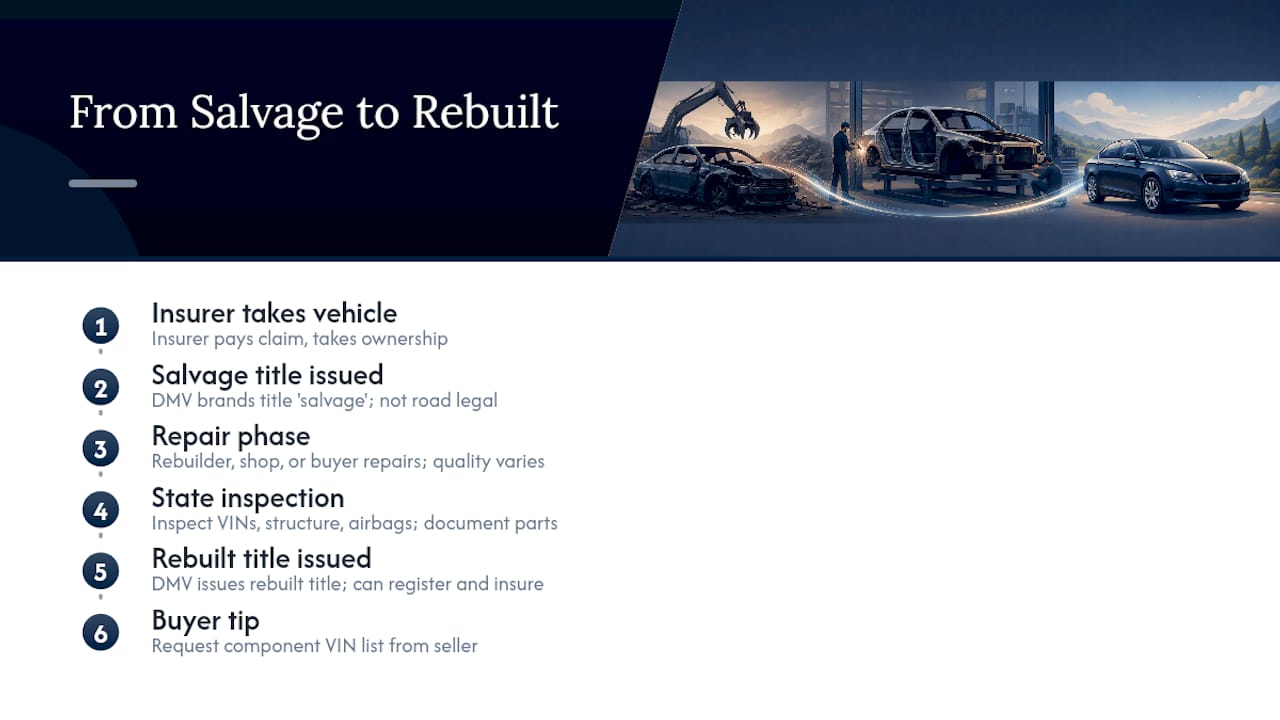
The insurer pays the claim and takes ownership of the vehicle.
Step 2: Salvage title issuance. The state DMV brands the title "salvage." The car cannot be driven on public roads in this condition.
Step 3: Repair phase. A rebuilder, shop, or individual buyer purchases the salvage vehicle and makes repairs. Quality here is the wildcard. Some rebuilds are done by certified shops with proper parts; others are patchwork jobs using salvaged components from multiple vehicles.
Step 4: State-mandated inspection. The owner submits the repaired vehicle for a state inspection. Texas DMV requires rebuilt vehicles to pass safety and anti-theft inspections before a rebuilt title is issued. Inspectors typically verify the VIN, check structural integrity, confirm airbag deployment and replacement, and review documentation for major replaced components.
Step 5: Rebuilt title issuance. Once the vehicle passes, the DMV issues a rebuilt title. The car can now be registered, insured (subject to insurer policies), and driven legally.
Pro Tip: Ask the seller for the component VIN list. Many states require inspectors to document the VINs of major used parts installed during the rebuild, such as engines, transmissions, and airbag modules. This list confirms parts weren't stolen and that the rebuild was documented properly.
Rebuilt cars often sell at a steep discount relative to clean-title equivalents. They can be materially cheaper, often reflecting a large percentage below clean-title values, though the exact discount depends heavily on the make, model, damage type, and quality of repairs.
How a rebuilt title affects value, resale, financing, and insurance
The price tag looks attractive. The ownership math is where things get complicated.
Resale value and trade-in difficulty. Most dealerships refuse rebuilt-title trade-ins outright, and private buyers who know what they are looking at will negotiate hard. Cars that lenders and insurers view rebuilt-title vehicles as higher risk, and dealers often decline them for trade-ins because of resale and liability difficulties. When you eventually want to sell, your buyer pool shrinks considerably.
Insurance realities:
- Some insurers offer only liability coverage on rebuilt-title vehicles, refusing comprehensive and collision.
- Others will insure rebuilt cars but at higher premiums or with lower agreed values.
- Getting full replacement-cost coverage is rare. If the car is totaled again, your payout may be far below what you paid.
Financing realities:
- Many banks and credit unions decline to finance rebuilt-title vehicles entirely.
- Those that do often require larger down payments or charge higher interest rates.
- If you need a loan to buy the car, confirm lender approval before you get emotionally attached to the deal.
Hidden ownership costs buyers underestimate:
- Modern ADAS sensors (lane-keep assist, automatic emergency braking, adaptive cruise) require precise calibration after any significant collision repair. Consumer Reports warns that latent ADAS and electrical failures are among the most serious risks in rebuilt vehicles, and standard inspections often miss calibration errors.
- Structural repairs that look clean can hide frame flex, which causes uneven tire wear and handling problems over time.
- Manufacturer warranties do not transfer to rebuilt-title vehicles in most cases.
- Flood-damaged vehicles that were rebuilt can develop persistent electrical gremlins months or years after purchase.
Should you buy a rebuilt-title car?
The honest answer is: it depends on the damage type, the quality of the rebuild, and your specific situation. For most buyers, the answer is no without thorough verification. For a narrow set of buyers, it can be a reasonable decision.
| Factor | Rebuilt Title | Clean Title |
|---|---|---|
| Purchase price | Significantly lower | Market rate |
| Insurance options | Limited; liability-only common | Full coverage available |
| Financing availability | Many lenders decline | Standard financing |
| Resale value | Substantially reduced | Normal depreciation |
| Hidden repair risks | High (ADAS, structural, flood) | Lower |
| Best for | Long-term keeper, knowledgeable buyer | Most buyers |
Pros:
- Lower upfront cost, sometimes 30–40% below a comparable clean-title vehicle.
- Can be a reasonable buy for a second car, a project vehicle, or a daily driver you plan to keep for years with no intention to trade in.
- If the damage was purely cosmetic or mechanical (not structural or flood), and the repair is documented and verified, the risk profile improves.
Cons:
- Resale is genuinely difficult. Expect to sell privately at a further discount.
- Insurance and financing limits are real constraints, not theoretical ones.
- ADAS and electrical problems from crash damage can surface long after purchase.
- The state inspection that produced the rebuilt title may not have been rigorous. Standards vary enormously.
Pro Tip: The single best use case for a rebuilt-title car is a simple, older vehicle with documented mechanical-only damage, bought by someone who plans to keep it for five or more years and has access to a trusted mechanic. The worst use case is a late-model vehicle with flood damage or significant structural repair, bought by someone who needs financing and full insurance coverage.
Consumer Reports advises that the primary benefit is the lower price, but buyers must quantify the likely ownership and resale penalties before assuming the purchase is a deal.
What to check before buying a rebuilt-title car
Do not skip steps here. This is where buyers get burned.
Documents to obtain and verify
- Original salvage title — confirms the vehicle was properly declared a total loss and not just a paperwork shuffle.
- Repair invoices and parts receipts — itemized, from a licensed shop when possible. Missing invoices are a red flag.
- State inspection report — the official document showing the vehicle passed the rebuilt inspection. Ask for the inspector's name and license number.
- Complete title chain — every title from clean to salvage to rebuilt, showing no gaps.
- Component VIN list — if the state required it, this documents major replaced parts and their origins.
- Odometer disclosure records — cross-check against the vehicle-history report.
Physical inspection focus areas
- Frame and structural repairs: Look for uneven panel gaps, mismatched paint texture, and weld marks in the engine bay or under the vehicle. A frame that was bent and straightened may look fine but handle differently under stress.
- Paint and body seam mismatches: Overspray on rubber seals, mismatched paint sheen between panels, and inconsistent body gaps all suggest significant body work.
- Water damage signs: Musty smell, rust under floor mats, water stains on seat belts, and corrosion on electrical connectors are classic flood indicators.
- Wiring and electronics: Check every electronic system: windows, locks, infotainment, backup camera, and all ADAS features. Have a shop scan for stored fault codes.
- Airbag replacement evidence: Confirm airbags were replaced, not just the warning light reset. A deployed airbag that was never replaced is a serious safety issue.
Red flags that should stop the deal
- Missing or incomplete repair records with no explanation.
- Evidence of prior flooding (rust patterns, water lines, corroded fuse boxes) on a vehicle not disclosed as flood-damaged.
- VIN plates that look tampered with, re-stamped, or inconsistent with the title.
- A seller who cannot produce the original salvage title.
- Title-washing signs: the vehicle was titled in multiple states in a short period with no clear reason.
Test-drive checklist: Listen for unusual noises over bumps (frame flex), check that the steering wheel is centered at highway speed (alignment), watch for any warning lights that appear and disappear, and test every electronic feature including adaptive cruise and lane-keep assist if equipped.
How to verify a vehicle's past before you commit
Verification is not optional on a rebuilt-title car. Here is the workflow.
Step 1: VIN lookup. Pull the 17-character VIN from the dashboard (driver's side, visible through the windshield) and the door jamb. They must match. Run it through NICB VINCheck immediately.
Step 2: Order an official vehicle-history report. A VIN check gives you a starting point; a full vehicle-history report gives you the complete picture: title brands across every state, accident reports, odometer readings, ownership history, and service records. This is the document you use to negotiate and to show your insurer.
Step 3: Check NMVTIS and state DMV records. NMVTIS tracks title brands across state lines. If the vehicle was titled in three states in two years, that is a title-washing signal worth investigating.
Step 4: Review accident and service records. Cross-reference the repair invoices the seller provides against what the vehicle-history report shows. Gaps between reported accidents and claimed repairs are a warning sign.
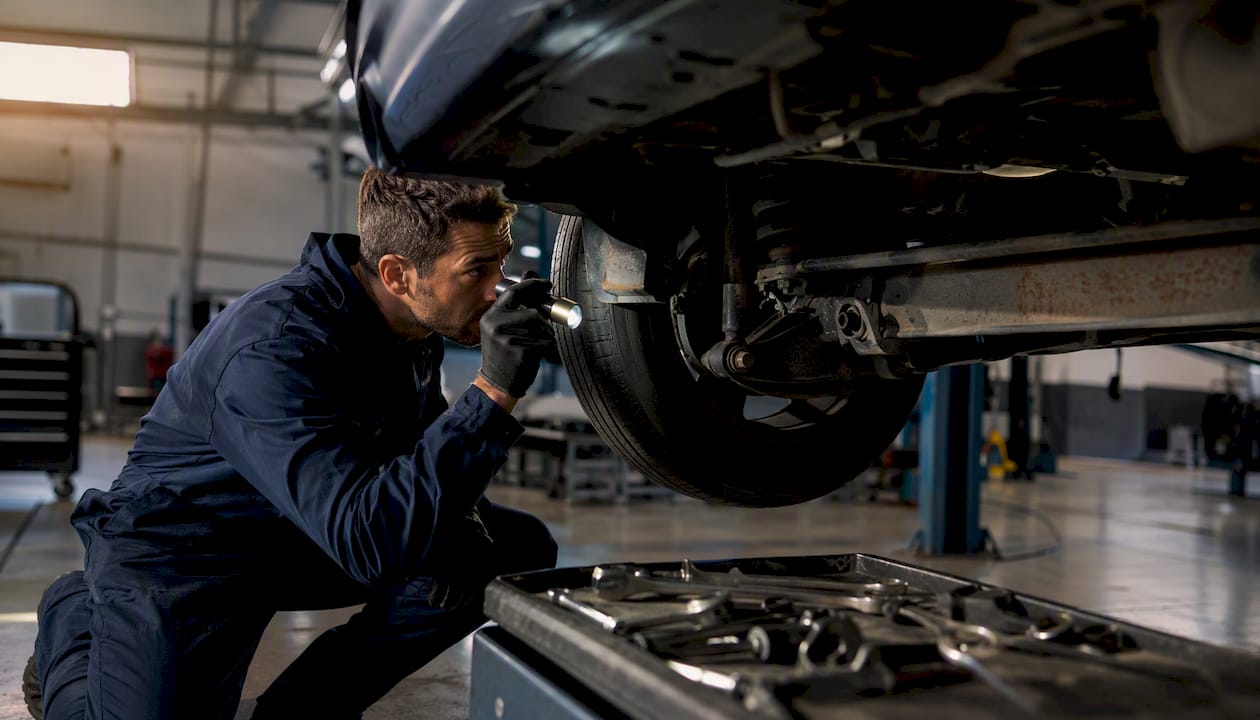
Step 5: Confirm with a mechanic. A pre-purchase inspection by an independent mechanic, not one recommended by the seller, is the final filter. Ask specifically for a frame inspection, an ADAS calibration check, and a scan for stored fault codes.
Pro Tip: Vehicle-history reports have real limits. Not every accident gets reported to insurance, and not every repair shows up in service records. The report is essential, but it is not a guarantee. Pair it with a physical inspection every time.
The rebuilt brand is permanent in NMVTIS and follows the VIN across state lines, which makes it harder for sellers to fully erase the designation when retitling in another jurisdiction. Harder, not impossible.
State differences, title-washing, and why "rebuilt" is not a universal standard
A rebuilt title in one state is not the same as a rebuilt title in another. That inconsistency is one of the most underappreciated risks in this market.
Wikipedia's salvage title entry notes that title brands and the thresholds for salvage and rebuilt vary considerably by state and province, which creates inconsistency and enables title-washing when vehicles move across jurisdictions. Some require detailed structural inspections; others are far less rigorous.
Title-washing is the practice of retitling a vehicle in a state with looser branding rules to obscure its history. A car with a salvage brand in one state gets repaired minimally, retitled in a state that does not recognize the original brand, and sold as a clean-title vehicle. NMVTIS was designed to prevent this, but gaps in reporting still exist.
Warning signs of a washed title:
- Multiple state titles in a short period with no clear reason (relocation, military service).
- A vehicle-history report that shows a gap in ownership or registration.
- A seller who cannot explain why the car was titled in several states.
- Title brand history that does not match the seller's story about the vehicle's past.
Action steps to protect yourself:
- Always run the VIN through NMVTIS or NICB VINCheck before anything else.
- Request out-of-state repair records if the vehicle was rebuilt in a different state than where it is currently titled.
- Insist on the original salvage title documentation, not just the current rebuilt title.
- If the vehicle-history report shows a gap of more than a few months with no explanation, ask for documentation covering that period.
Pro Tip: If a seller cannot produce the original salvage title, walk away. That document is the foundation of the entire rebuild history. No original salvage title means no verified starting point.
Price expectations and negotiation tactics for rebuilt-title cars
Knowing the typical discount range gives you a real negotiating position.
Some estimates suggest rebuilt and salvage vehicles sell at a significant discount compared to a comparable clean-title vehicle's market value. The actual discount you should expect depends on the damage type, the quality of the rebuild, the make and model, and current market conditions. A well-documented mechanical rebuild on a simple older vehicle might warrant a smaller discount; a flood-damaged late-model SUV with questionable repair records should be priced far lower.
Negotiation levers to use:
- Repair receipts and inspection findings: Any deficiency your mechanic finds is a direct price reduction argument. Get the inspection in writing.
- Insurance limitations: If you can only get liability coverage, the car's effective value to you is lower. Make that explicit in the negotiation.
- Financing constraints: If the seller is expecting you to finance through a standard lender, remind them that many banks decline rebuilt-title vehicles. Cash or specialty financing changes the deal dynamics.
- Resale discount: The car will be harder to sell later. Price that in now, not when you are trying to sell.
- Trade-in reality: Cars.com confirms that dealerships often refuse rebuilt-title trade-ins entirely. If you ever plan to trade this car in, factor in that you will likely need to sell it privately at a further discount.
Walk away and find a seller who understands the market.
When a rebuilt-title car is a reasonable buy: a final verdict
Buy a rebuilt-title car only when all of the following are true: the vehicle-history report is clean beyond the known salvage event, a trusted mechanic has inspected it and found no structural or electrical concerns, you can get adequate insurance coverage, and the price reflects a genuine discount from clean-title market value.
Final pre-purchase checklist:
- Original salvage title in hand and verified.
- Official vehicle-history report ordered and reviewed.
- NMVTIS/NICB VINCheck run on the VIN.
- No title-washing signals (multiple state titles, unexplained gaps).
- Independent mechanic inspection completed, including frame check and ADAS scan.
- Insurance confirmed in writing before purchase.
- Financing secured (if needed) from a lender who accepts rebuilt-title vehicles.
- Repair invoices and component VIN list reviewed and verified.
When to walk away: missing repair records, flood damage on a non-flood-disclosed vehicle, inconsistent VINs, a seller who resists any independent inspection, or a price that does not reflect the rebuilt-title discount.
Practical resale horizon: plan to keep a rebuilt-title car for at least five years. The discount you paid at purchase is partially offset by the resale penalty you will face when selling. The longer you hold it, the more of that initial savings you actually keep.
The one thing most buyers get wrong
Most buyers focus on the price and the visible condition of the car. The real risk is invisible: ADAS calibration errors that a standard inspection misses, latent electrical damage from flood or fire, and structural flex that only shows up after a few months of driving. Consumer Reports is direct about this: the savings on a rebuilt-title car rarely compensate for the hidden long-term costs once you account for insurance limits, resale difficulty, and potential safety system failures.
The buyers who come out ahead on rebuilt-title cars are the ones who treat the verification process as seriously as the purchase itself. They order the report before they fall in love with the car. They bring a mechanic who knows what to look for. They confirm insurance before they sign anything. That discipline is what separates a good deal from an expensive mistake.
Vinify gives you an official report and an AI verdict before you commit
Knowing what to check is one thing. Having the documentation in hand before you negotiate is another. Vinify delivers an official Carfax vehicle-history report by VIN or license plate in minutes, covering title brands, accident history, odometer records, ownership chain, and service history.
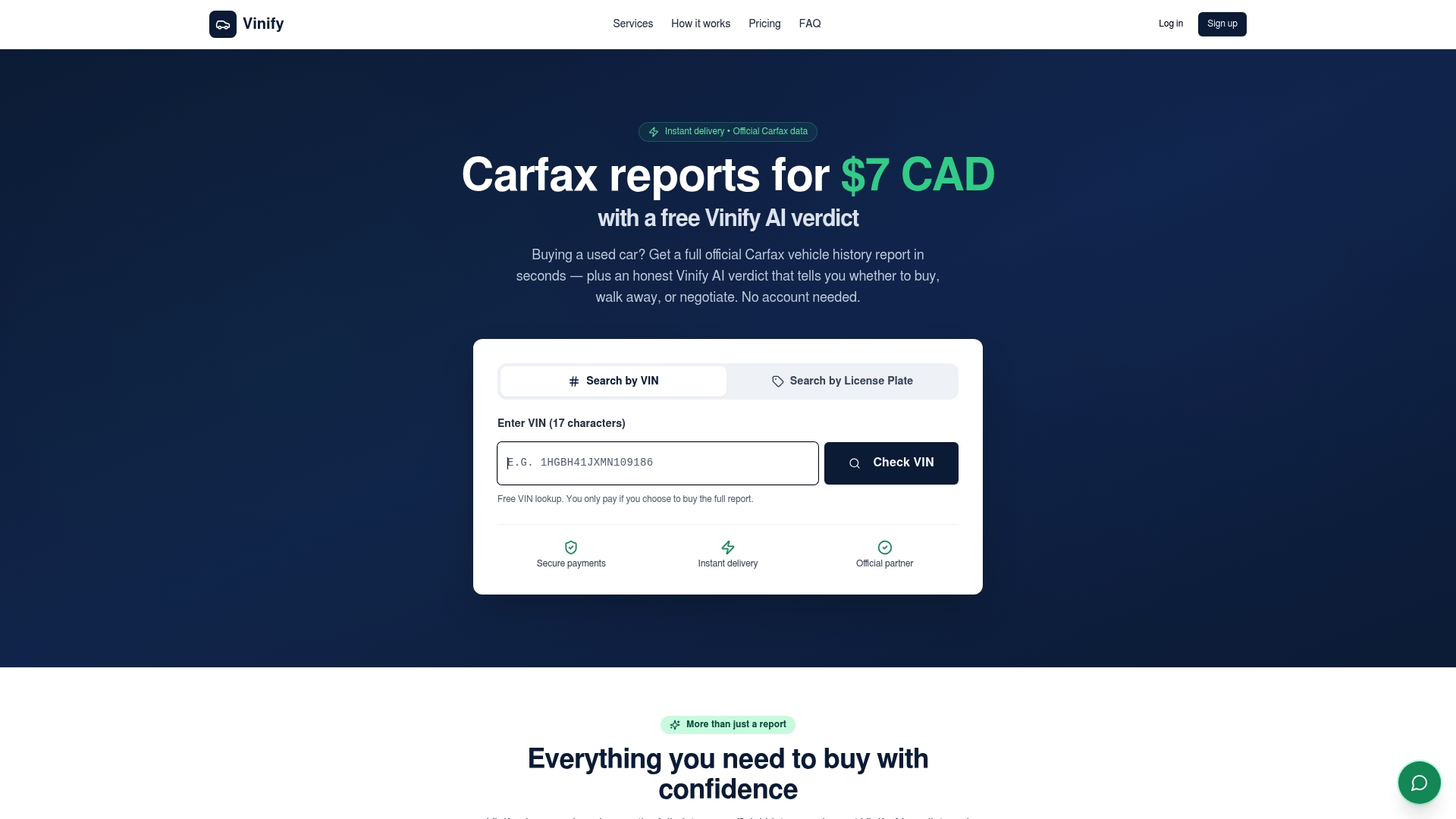
What sets Vinify apart for rebuilt-title situations is the AI Judge: it analyzes the full report and returns a score from 0 to 100 with a clear Buy, Caution, or Avoid verdict. For a rebuilt-title car, that verdict factors in the severity of the title brand, the accident record, and the ownership history in a way that a raw data dump does not. You get the evidence you need to negotiate, the documentation your insurer or lender may ask for, and a plain-language recommendation. Reports start at $7, with membership credit packs available for buyers comparing multiple vehicles. Run the VIN at Vinify before your next inspection appointment.
Sources
These are the authoritative resources to consult when researching any rebuilt or salvage-title vehicle.
- Txdmv
- Cars
- Should You Buy a Car With a Rebuilt Title? - Consumer Reports
- What Is a Rebuilt Car Title? - J.D. Power
- NICB VINCheck